

Understanding the Journey
Small businesses evolve through distinct growth stages, each presenting unique challenges and opportunities. Neil C. Churchill and Virginia L. Lew’s groundbreaking research sheds light on the early development of businesses—a phase often overlooked but critical to long-term success. By examining these stages in detail, they provide valuable insights for entrepreneurs navigating the complex journey of growing a small business.
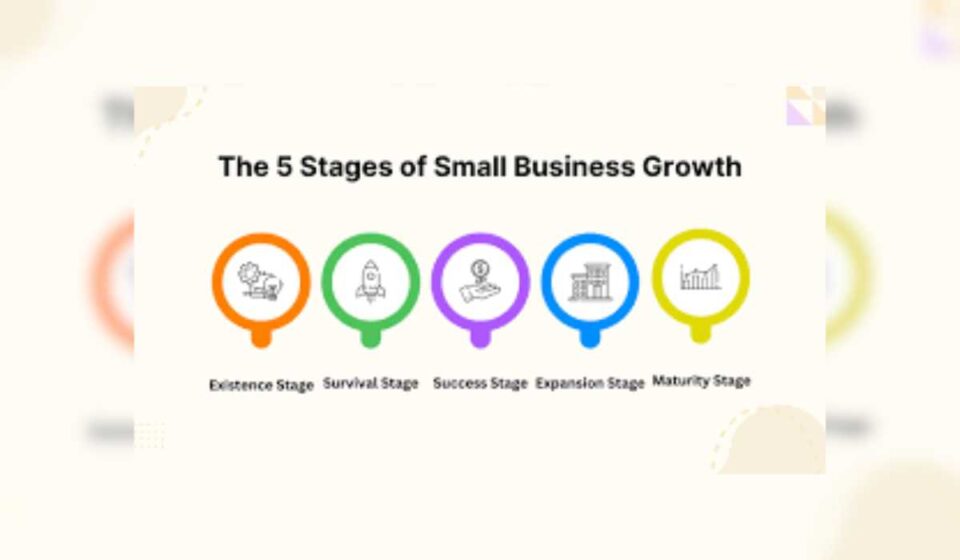
The Birth Stage – Existence
The first stage, existence, focuses on survival. Entrepreneurs grapple with defining their offerings, acquiring customers, and delivering products or services effectively. At this stage, the business relies heavily on the founder’s efforts and resources, with little to no delegation or structured systems in place. The primary goal is to prove the business concept and establish a foothold in the market.
Building Stability – Survival
Once existence is secured, businesses enter the survival stage. Here, the emphasis shifts to generating consistent revenue and covering operational costs. While growth is still limited, businesses focus on maintaining stability. Cash flow management becomes critical, and the ability to adapt to challenges determines whether the business progresses or stagnates.
Scaling Up – Success and Expansion
In the success stage, businesses begin to scale. Entrepreneurs face the choice of consolidating gains for stability or aggressively pursuing expansion. Decision-making shifts to include delegation and strategic planning as the organization grows in complexity. Successful navigation of this stage lays the foundation for broader market reach and increased profitability.
Maturity and Beyond
The final stages—takeoff and resource maturity—mark a transition to a fully developed organization. During takeoff, businesses refine operational efficiency and manage rapid growth, often requiring significant investment. Resource maturity brings a focus on long-term sustainability, balancing innovation with stability. Understanding and preparing for these stages ensures the business not only grows but thrives over time.
This framework emphasizes that growth is a continuous process of learning, adapting, and evolving, offering invaluable guidance to small-business owners.
